Blind is an adventure puzzle game with a dark story and unique concept.
You are Jean, driving your little brother somewhere. A man appears in front of you and you crash into a tree. You wake up in a unknown but familiar mansion. You open your eyes but find out that you can't see. After a while a voice guides you to a main room where you learn that in order to escape the mansion you have to solve all the puzzles it contains. As you progress you will realize that things are not as real as they seem to be at first and you will slowly realize what is going on.
Walking around the mansion can be a bit frustrating to those used to see all the time. If you stop and stand still, everything around you will turn dark (unless it makes sound). In order to 'see' you need to produce sound be it with objects you find or with a cane you get later on. Each sound produced will temporarily show you a certain part of an area around you depending on how strong the sound was. You will be allowed to explore the mansion and solve all kinds of different puzzles. Even though you are supposedly blind, the puzzles are often visual and do not use sound much even though one of the earlier puzzles is to put together a song. The puzzles are not difficult nor too easy. The thing is, you have to follow the instructions given to you. If you miss the hints you will have to figure it out on your own and the puzzles don't have the most logical solution. All you need to do is pay attention to your surroundings and to what you hear. If you do that you won't have problems finishing the game.
The whole game is played in the dark - the graphics being done in black and white. The louder sound you produce the whiter will be what you see. Too loud of a sound can make you go blind for a second. Light touches will illuminate just a very small area so you will need to figure out how much sound is needed to illuminate what you need to see. It's nothing beautiful to look at but works well to immerse you in 'darkness'. Since you can hear sounds from the inside of objects you are also capable to see cogs and wheel and tubes in the walls which is really nice.
The sound effects are great. The cane produces different sounds depending on what you tap with it. The sound can be sharp if you hit something metallic or stone and will be a muffled thud if you hit a carpet or something else that is soft. Other sound effects are good and can be used to orient yourself in the dark (on the other hand you will also see what produces the sound). Soundtrack is created from one beautiful song you will here in the credits. Voice acting is something I did not like at all and I think it could have been done better.
Verdict: I would recommend the game to anyone looking for a narrative driven adventure game with exploration and puzzles. The game requires thus a bit of patience. The experience of using echolocation to walk around may be stressful to some. It is a unique experience though and I think it is worth exploring it. I orient myself by sound in real life and I had a totally different experience when playing the game. Honestly the idea of throwing objects on the ground to 'see' did not even come to my mind at all and I had no problem walking around without the cane. Everything you need to see can be heard or actually seen. So if you get stuck just stand still and listen/look around.
I would not recommend the game to people who are impatient and are used to quality of life features and games with good controls and stuff actually working as they should.
If I say 'light saber' many people will imagine a sword with energy beam blade from Star Wars. Many of us at least once wished to wield this weapon and just slash around with it in the dark. Well, now thanks to Beat Games you can.
Beat Saber is a VR rhythm game. You'll be standing in a rather dark place, color blocks will fly towards you and you will be cutting them in half with your virtual light sabers in time with music and spectacular lighting effects. Notes, the flying blocks, are blue or red and come from one position of a 12 square grid. Depending on the color you have to either use your left (red) or right saber (blue) to cut them. The notes also have directional arrows (8 possible directions) on them and that's how you have to slash through them.
While you are supposed to hit the notes on beat it's not actually what the game is about if you want to get a good score. The thing that makes Beat Saber more fun and more challenging is the fact that your slashes are not evaluated on the timing but rather how well you cut the block. Your swing has to be quite big before reaching the block and after you cut it in half. How close to the center you hit is also evaluated. You get a certain score for that and if you don't miss any notes you will start getting a score multiplier that goes up to 8. When you miss it resets. Each miss or a bad cut (when blue saber hits a red note or cuts the correct note in a wrong direction) will cost you life or some kind of energy that you can see in front of you under the flying notes area. When this bar reaches 0 you fail the song.
There are also modifiers in game that you can use to tweak the game play. The ones that will make the game harder will get you a higher score multiplier. For example playing with Faster Song and Disappearing arrows would give you a 0.15 additional multiplier (1.15x thus). Modifiers that make the game easier will give you less points per cut but can make it more enjoyable to play - for example you can turn off obstacles, or turn fail off.
Apart from notes there are obstacles in the game. Those are walls that sometimes you need to avoid as they will come right at you. You just step aside (move your head) or crouch. There are also bombs, spiky mines that you need to avoid with your sabers. Hitting either of these obstacles will break the combo so it is better to avoid them (actually it probably takes some of your life as well). These are mostly decorative thought and not many maps use these in a way that would make you move well with the exception of FitBeat in the original game. As for custom songs there is a mapper named Alice who makes good wall maps (see Oyasumi video below).
Hitting flying blocks in general is very easy. We all can do it. Concentrating on hitting them correctly and in the correct direction is not that easy and needs to be learned. Beat Saber has a nice learning curve. The learning curve in this game even on the official songs is good though so in the long run this game is more beginner friendly than other rhythm games (that are though often way better for initial experience).
The music is often important for those that play rhythm games and here we have a variety of music if we count all the DLCs. The base game contains mostly songs by Jaroslav Beck. There are some extras which may be songs you know already like Crab Rave, Pop/Stars or Angel Voices. For free you also get a whole Camellia song pack which I personally find great but it's also clearly the odd pack out of all the base songs. He's mostly known for hardcore and speedcore songs which may not be to everyone's taste.
Currently there are these DLCs released in this order Monstercat, Imagine Dragons, Panic! At the Disco, Monstercat X Rocket League, Green Day, Timbaland, Linkin Park, BTS, Interscope Mixtape, Skrillex, Billie Eilish and Lady Gaga. It looks like Beat Games and Facebook is providing the mass player base their favorite artists. I'm not into this kind of music even though Panic! At the Disco was a new discovery for me which I enjoy and Interscope Mixtape contains good oldies.
As for mapping, it was mainly done by one mapper who breathed life into Beat Saber and we can thank him for that. It is not an easy task to come up with a way how to make good, different and fun maps using 12 possible positions of blocks. Rhythm games were around for years though and many of those playing them figured out what they like in their maps. Nothing of that could be found in Beat Saber in the early days but that slowly changed as the community took over and figured out what works in Beat Saber. Anyway back to the official content. The oldest content is very bad. The first two DLCs while still really bad have shown some kind of a good progress. The following three DLCs got slightly better and I found some maps there that I enjoyed. Timbaland is a DLC I would not recommend to anyone. Linkin Park is where it got better. BTS has some really good maps. Interscope Mixtape is a wild, wild west but has a lot of good stuff going on. It looks like mappers tried to see what people can withstand in terms of patterns. Skrillex is more coherent and compact. The last two DLCs look good. I believe the DLCs will only get better in terms of mapping since more good mappers joined the team.
Compared to other rhythm games this game doesn't offer much of a good free content. There are several very good songs (OST4 and Spooky Beat) but otherwise the content is pretty bad. DLCs are currently mostly bad but with each new DLC there will be good content.
Beat Saber offers different modes of play. The most common one is Solo - a single player standard mode where you use two sabers. Some maps have one saber maps or 90 or 360 degrees maps. 360 degree maps are great but unfortunately no one focused on them long enough and we lack good maps. There is also a campaign mode which is more of a tutorial and information on how to play the game rather than something meant to be challenging. From 1.12 there is a multiplayer which you can either play in a private lobby with friends or join a public lobby. For some this may be the best way to enjoy the game.
The game has a big modding community and mappers who create lot of mods and custom songs which makes Beat Saber a really great game since the base game is rather lacking in some aspects. There exists Scoresaber, the biggest leaderboard for custom songs. There are ranked custom songs that will earn you certain amount of performance points based on some criteria and this way you can also try to reach the top of your country's leaderboard or the world one. The mods can do many things from searching and downloading songs, getting it ready for streaming, being able to play modded maps, showing all kinds of stats, using custom avatars or sabers, new game modes etc. People are very creative and I'm sure you will discover a good combination of mods to make the game very enjoyable for you.
Verdict: There is something Beat Saber excels at - it has very good mechanics and score system. The base game content (even with DLCs) though is rather subpar. If you are looking for a game to be played as is without you modding it, where you will pay once and get good content than this is not the game to buy. If you plan on modding the game and playing custom songs, a whole new world will open up for you, a world where you will surely find something you will like. There's many bad maps but also ones that are very good and also look spectacular. Scoresaber makes it a good game even for competitive players because the ranked songs will certainly challenge you at some point. Ranked songs also get better and better in terms of mapping. After all Beat Saber has the biggest community that makes the game great.
I would recommend Beat Saber to players who want to get more invested in the game and are willing to mod it. Those that are looking for a good casual experience from time to time or a game they can show to new players I'd advise to buy a different game.
Since rhythm games first emerged in late 90s many games were produced for different platforms. With the rise of mobile devices using a touch screen this game genre got even more popular. Finding a good rhythm game became harder and in order for a rhythm game to be good it has to stand out even more than in the earlier days. Muse Dash is one of those games that stands out with its art style, catchy tunes and simple but great game play.
Muse Dash developed and published by PeroPeroGames is a side scrolling rhythm game which makes you press two buttons or tap the screen at two different places in time with the music's beat. On your screen you'll see one of your chosen characters running, attacking enemies and avoiding obstacles. The enemies and obstacles, the notes following rhythm of the song, come at her in two lanes. In order to attack or avoid these you have to press one or the other button in time. You can map those yourself, but the default for keyboard is D, F for ground level and J, K for the upper level. Apart from notes that you simply hit, there are also sheet notes that you have to hold and (mini)bosses that require you to punch them many times in a very short time. The character has hit points. Whenever you run into an enemy or an obstacle the character will lose some life and points. Sometimes, in a chart, you'll see a heart. If you run through it you will regain some life and gain extra points.
The game is very simple but the very lively graphics and animations make it a great playing experience. On the other hand, sometimes this can be difficult to read. Some notes will come from unlikely places and won't correspond to the blue/pink color the regular notes have. While this may be a bit of a challenge to sight-read it is very satisfying to hit all the enemies.
There is over 50 default songs that you can unlock. After each stage you will gain some experience. With each level at first you will unlock one song. At higher levels it will take longer. Leveling up will also give you more items that you can use to get more sexy girls and cute support animals. Each of the characters and elfins have certain abilities that can either help you survive songs or get higher scores etc. So you can find a combination that suits your playstyle, skill or current motivation you have for playing (getting full combos or getting the highest score etc.).
Getting the highest score possible will depend on your ability to use a special feature in the game named Fever. While under Fever score received will be higher. Finding the best moment to use Fever in a song will lead you to getting higher score, considering that you can full combo the song already.
For Asian rhythm game players the music won't be anything new. I can name a few, from my favorites creating nice chill instrumental tracks like M2U, a_hisa, Ayatsugu_otowa to pop songs with vocals to very well known artists like Camellia, REDALiCE, t+pazolite, USAO which are known for their hardcore music. While it may not seem from my examples, the music in the game is very diverse and I honestly think that anyone can find something they will like.
As in many rhythm games, the songs have different difficulties - Easy, Hard and Master. Master difficulty needs to be unlocked and as in other Asian games you need to get an S on the easier difficulty (in this case Hard). That means getting 90% accuracy or higher. See each enemy hit is judged either by Perfect, Great if you are a bit too early or late and Miss if you miss the note. Obstacles can be missed (usually meaning you run into them and take damage) or passed (jumped over).
The game has leaderboards, that are filled with people who got 100% accuracy and even the highest score. There are also many achievements that are either song based or just game based. There is so many of them that you will most likely get some each time you play. It adds to the replayability of the game or the songs themselves.
The scores are transferable from mobile to PC and vice versa, but the DLCs you have to buy for each platform. The 'you get everything' DLC for Muse Dash costs 30 EUR. It is definitely worth all the money. The base game itself is very cheap - 3.49 EUR - and for that price offers hours and hours of fun.
If by a chance side scrolling feels odd to you, you can always turn the monitor sideways!
Verdict:
Muse Dash is a very cute looking, lewd and nicely done casual rhythm game. Game play is very simple but that also makes it great for beginners and casual players that just want to enjoy an easy game. The aesthetics of the game and animations make playing the game a great experience and make you want to come back and simply play more. The replayability is also helped by many achievements and special abilities by your character and its elfin. The music is diverse and the charts feel fun and not too straining for your fingers. In overall this a very solid and cheap game no matter if you play it on mobile, Switch or PC.
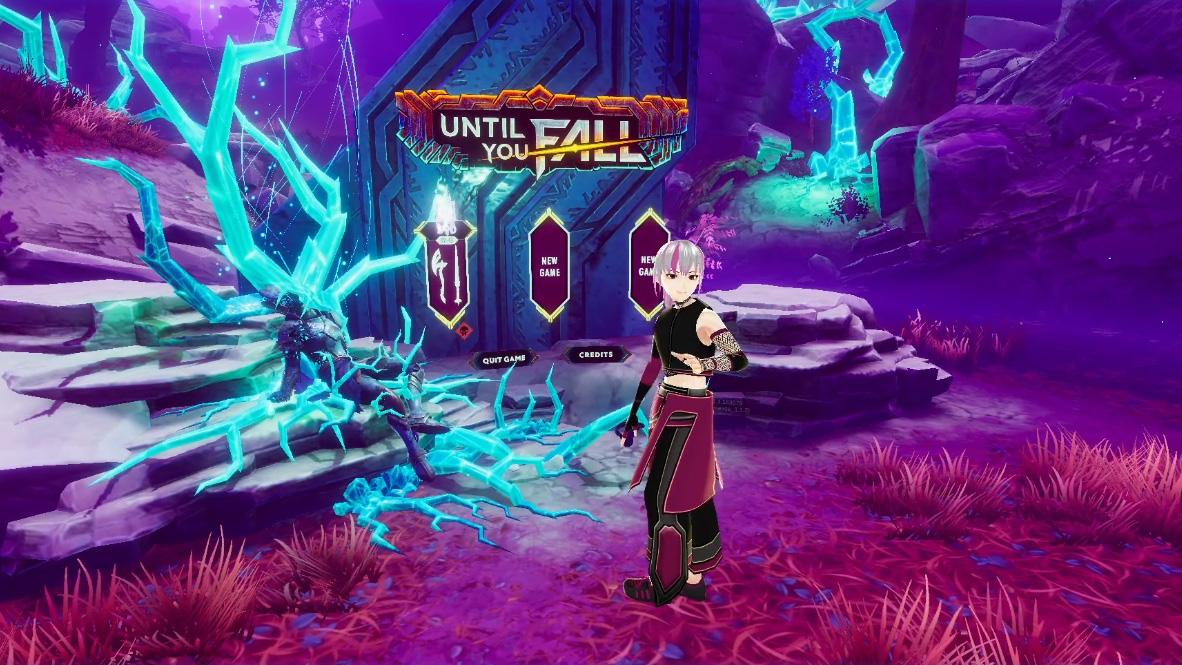
When I heard the name of a game named Until You Fall I had no idea what kind of a game to envision. If it weren't a VR title I might have actually figured it out. The thing is, Until You Fall is a rogue-like game. Now the name makes sense! After you put on your headset and start the game you will become an unnamed last remaining rune knight who is the only one who can fight the horrors that ran over Rokar, once a magically advanced civilization. Equipped with one or two melee weapons, you can cast spells, dodge attacks, and hack and slash through magic monsters until you fall or after you defeat all the enemies and successfully run through the available campaign. Since this is a rogue-like game you are more likely to die many, many times before you defeat the final boss. The run consists of enclosed relatively small areas that are connected to each other. After you defeat a batch of randomly generated number of enemies in each area you will be allowed to pick a reward that will last for the remainder of the run. You can upgrade your weapons with abilities or you can upgrade your own abilities, or you can recover health or gain additional health. The last possible reward is Aether, a magical substance that works as a currency in the game. After you die, you appear in a hub where you can spend the Aether and let a runesmith forge you new weapons or spells or you can also let her upgrade them. The upgrades done by the runesmith are permanent. The weapons gain levels, their stats increase, their abilities get better. They also have a special ability that needs to be charged and then it can be used.
The actual combat is more of an arcade experience rather than mindlessly hacking and slashing at virtual enemies. There are two ways how to damage your foes. You can either hit them when they do not block which will slowly chip away some of their shield 'life' or you can block their attacks to destroy their shields for a while and then unleash a deadly combo that will deal huge amounts of health damage, the wider the attack the more damage. In order to combo off you need to align the attack with a line that will show up. After your maximum combo attacks end the enemy will become invulnerable for a while and will start attacking again. Before a foe attacks a blue bar will show up where the attack will land and it will start filling up with color. When it fills up the attack will land and will hit you unless you put one of your weapons there to block. Some attacks are slow but some are fast and can also come at you in quick succession. There are other attacks that will require you to dodge in a given direction, so you will need to be prepared to dive or tilt (or step out of range). You also have the ability to dash in any direction. You can either use this to avoid AoE, attacks with bigger reach or ranged attacks. You can also use this as an attack because it deals guard damage and can help you break the shield faster. There is a limit to how many times you can use it, but it replenishes quite fast. You can decide how to use this kind of an ability and upgrade it in a way that suits you. Similarly you can choose and upgrade the weapons you'll use in combat. The lighter the weapon the faster it moves. A dagger or rapier will simply follow the movement of your controller or tracker and thus are great for blocking but heavier weapons like a mace or axe will lag behind but can deal huge amounts of damage. Pretty cool feature for a VR game.
First few runs you might be a bit lost about how the game works. You will have to figure out the pace of the combat, when you can and can't attack (at some point enemies are invulnerable), and what weapon combination you want to use and which temporary upgrades will be the best for that combination. At first you might just want to go as far as possible just grabbing aether, buying all the weapons and testing them out (and upgrading those you want to use).
The key of survival is fighting enemies one by one or in smaller groups. When you fight one foe another might come and start attacking. You might see a exclamation mark show up and then hear the attack so you can turn after that sound, block the attack, and continue fighting either of the enemies you battle.
The world of Rokar is a very colorful place with neon glowing flora, magic and crystals. While it gets darker and darker the further you get it still has a great contrast. The particles, special effects and atmospheric effects make it feel even vibrant. The soundtrack suits the pace of the game and makes you want to stay active hacking and slashing at enemies to the rhythm of the songs. Sound effects are great and the spatial sound will help you orient in battle without the need to constantly look around, being afraid of an incoming attack.
The game can be played seated even though I wouldn't recommend it if you can stand on your feet. While you don't need to move around physically (you can use thumbsticks for that) it is often better to move in real life than to fiddle with the game's locomotion following your headset in the middle of a battle.
The locomotion and turning is the only downside of the game even though you may not need this that much while you play the game.
Verdict:
Until You Fall is very polished VR game that allows you to choose the way you will fight and offers you an environment in which you can become better and explore everything the game offers. It shows that there is a fun and efficient way how to approach melee combat in VR games. There is depth, complexity and freedom - you can just simply mindlessly run into the fray or carefuly study the game mechanics and enemy attacks first. The game has great visuals, effects, sound and music, quality of life features and great menu. It is a great game and experience.
The Talos Principle is a puzzle game with a story that asks philosophical questions about being human, life, death and eternal life.
You will wake up in a garden and hear the words of Elohim, god-like creature claiming to have created you, guiding you one of his children to a temple and telling you to pass different kind of tests.
You will learn that you should be collecting Sigils to progress. Each of these is at the end of a spatial puzzle. Each of the puzzles is taking place in a closed area that can often feel like a labyrinth. You will have to deal with forcefields, sentinels (some explode when you walk closer to them), laser guns, closed door etc. For that you can use one or more tools you will get on your journey. For example, one tool will allow you to redirect laser beams, other will disable a forcefield or stop a sentinel in its track. There is also a cube that you can use in various ways (climb, or use to put pressure on something) and a fan that allows you to get to difficult to access places for example. One of the weirdest tools is a recording device (when you need two people to solve the puzzle).
The Sigils you will be collecting have a form of a tetrimino and are used to unlock doors. You will unlock a way to other very distinct worlds. In each world there is a hub from which there are doors leading to other parts of that one world. There you have the individual puzzles rewarding you with the Sigils. The Sigils have different colors and the difficulty of the puzzles is also reflected in that. You will start with collecting Green and Yellow Sigils mostly and these puzzles are quite easy. The green ones are good introductory puzzles, yellow ones are about testing what you learned from the green ones. In the later stages of the game all you will be collecting are red tetriminos and it is where it starts to get complicated. While exploring the worlds and solving puzzles you might come across golden stars. Those you can also collect and will take you through a hidden door to other puzzles. In order to get a golden star you will have to think outside of the individual puzzles, you will often need tools from different puzzles. There are different ways how to solve these and are very fun. Actually sometimes you won't even see the star itself, you will just encounter something that's not supposed to be there and after you get there you will discover a star. All the puzzles are very satisfying to solve and the star challenges were really brilliant and often breathtaking. The names of the puzzles are something to pay attention to, especially if you get stuck because they will give you a hint.
One of the great things is also the fact that you don't need to do any of the puzzles in a certain order but you do need to collect specific tetriminos and certain amount of stars in order to open doors. It gives you freedom and also won't frustrate you if you get stuck. You can just go do different puzzles and come back (to realize how simple the solution was). All the puzzles are very well designed and while some need you to stack objects in a certain way you will mostly be thinking about how to effectively use the tools at your disposal since you've got a limited amount which is lower than the number of obstacles.
While exploring you will encounter QR messages from other children, audio logs, and (beeping) terminals. This is where the story part of the game takes places. When you hear a beeping sound and go closer you will discover a terminal on which you can read messages and articles from a corrupted archive and this way you will learn that something went terribly wrong. You will start asking yourself questions and later you will start a conversation with conscious artificial intelligence. It is here where most of the philosophical questions will be asked. This being will start questioning you and you will have to think hard how to answer. Your point of view will then be questioned and it is up to you whether you change your mind or not. The thing is, you are a robot while you think you are a human being, but are you?
You will start to think about mythology, eternal life, God, technology and (trans)humanity. Maybe you'll start pondering about your own future and the future of today's society. You will always be given a lot of time to ponder about all these questions and doing puzzles in the meantime. When you hear the next beep, you will most probably be ready for next encounter.
The conscious in the computer system will start making you doubt your creator - Elohim. You will most probably start questioning Elohim (hopefully because than the game will end prematurely) and start wondering what's at the top of the Tower which he forbid you to visit and will remind you of it whenever you start climbing up. If you decide to climb the tower you will learn even more and will still be able to decide what the outcome of the game will be.
I'm not entirely sure how to write about all that is going on in the game, I'm not that good of a writer. The experience is very unique and personal. The story is very deep, poses very important questions and everything is very well written. In all that there is even room for humor.
Even though I wanted to end the review here, I should also comment on graphics and sound. The game is very beautiful. The environments are large and I spent hours just walking around enjoying the view, the atmosferical effects and even tried to reach different places to see the environment from different point of views. This sometimes resulted in me stumbling upon a golden star. I had no problems with performance in VR and enjoyed a crystal clear and sharp textures all the time no matter how fast I moved or how close I was a wall. I was actually surprised how well the game looks on Rift because many games don't that great compared to Index. I would have never guessed this game is from 2014. Music and sound is excellent. Music is a delight and I'd just stand on the beach, watch the setting sun and listen to the music. The little voice acting there is, is impeccable - in terms of it makes you feel emotions and not many games I played achieved that.
Verdict: I bought this game for the puzzles but very soon realized that it is not about the puzzles. While the game can be played just as a puzzle game, and very good one, you will miss a lot if you ignore the story. The story is philosophical, thought-provoking, well written. The game has a very good learning curve, is also well structured and offers even more challenging puzzles to hardcore players. The game environments are distinct, beautiful, breathtaking and simply serene. The music is soothing for the soul. In overall it is a perfect game.
The first The Room game I played was the VR title named The Room: Dark Matter. I enjoyed the game very much (review here) and that is why I decided to buy the previous games that existed at the time. After playing The Room One I was very disappointed with it (review here) and was not sure if I'd play the following games. I suffered through The Room Two - too ambitious project Fireproof Games didn't seem to know what to do with - and then just gave up. 11 months later I decided to play the third game in the series. To my surprise the game was different than the previous two games.
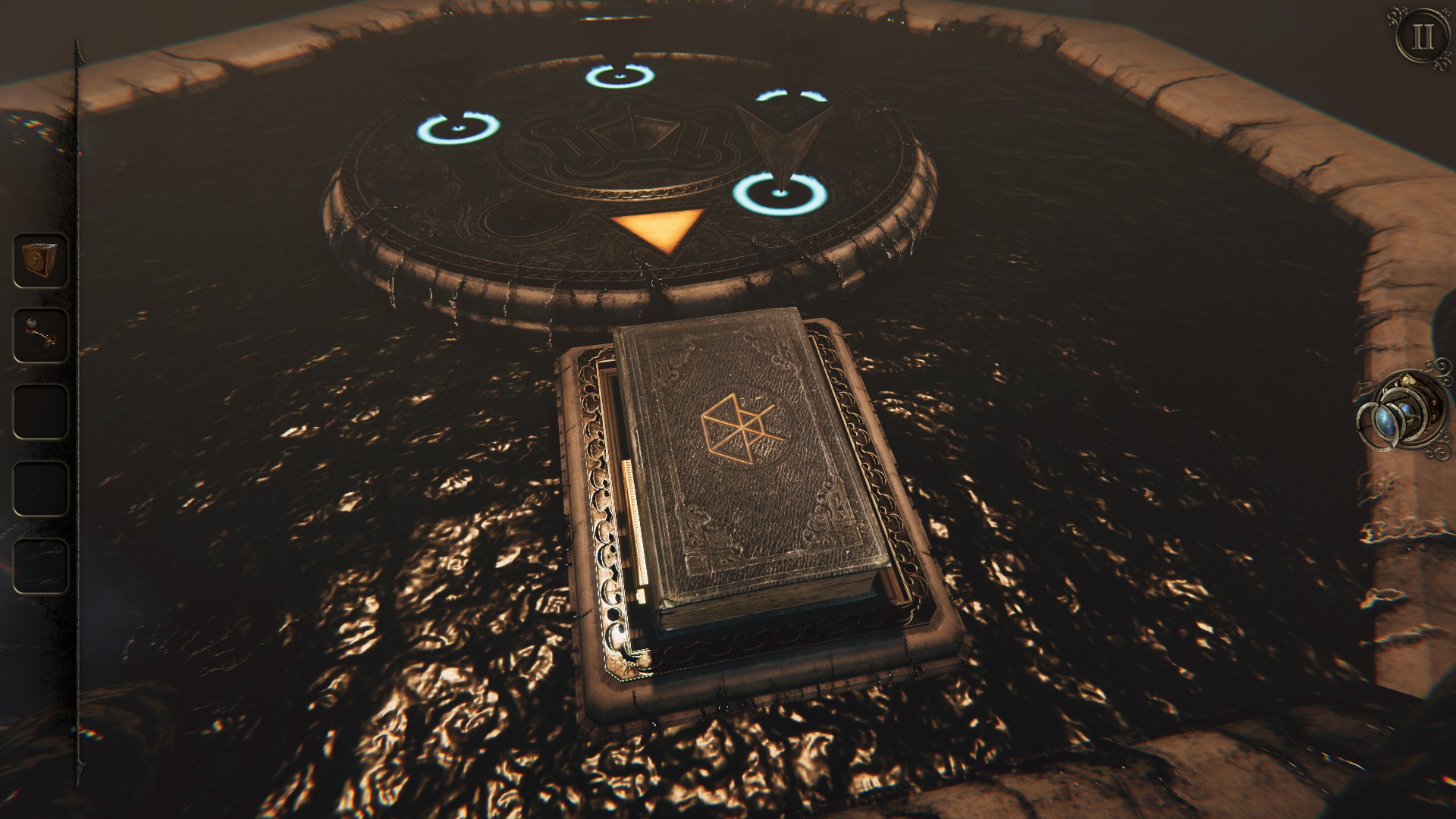
The Room Three is a mix of point and click adventure and a puzzle game developed and published by Fireproof Games for PC in 2018, three years after its original iOS/Android release. The game is about still unnamed protagonist from the previous games who gets kidnapped and imprisoned by The Craftsman on an island everyone avoids. The protagonist's task is to prove himself to the Craftsman and that is how the adventure begins. What you need to do is power up rooms or buildings, open a hidden door and solve a series of puzzles to get a pyramid. After collecting all the pyramids you are allowed to go to the final stage of the game and reach one of the several endings. While on your adventure or rather escape you learn more about the mystery about the Null - mysterious alien creatures/energy - through notes left by the Craftsman and his prisoner.
The Room Three is different compared to the previous two games mainly because the game takes place in one building complex where you have to walk around and backtrack to find and solve puzzles. For me it breathed more life into the game and gave me a sense of immersion that I didn't have in the previous games. The environments are beautiful and walking around would be simply wonderful if you could do that, instead there is one place you will simply appear after a rather long animation of getting there. The game is still linear and won't allow you to roam freely most of the time while you are 'locked in' a chapter. You are actually locked in a certain part and can't leave until you finish the chapter. After finishing the game for the first time you will be able to 'Change your fate'. You will be back in the old manor and you can try to walk around and solve certain puzzles to reach 3 more different endings. This time the objects you are looking for can be anywhere and can be used on something being totally elsewhere. Once you get all the needed objects you can go to the final stage of the game, solve the same puzzles over and over and get the different endings. In a way, we can be happy not to replay the whole game, but 'solving' the puzzles again certainly feels bad.
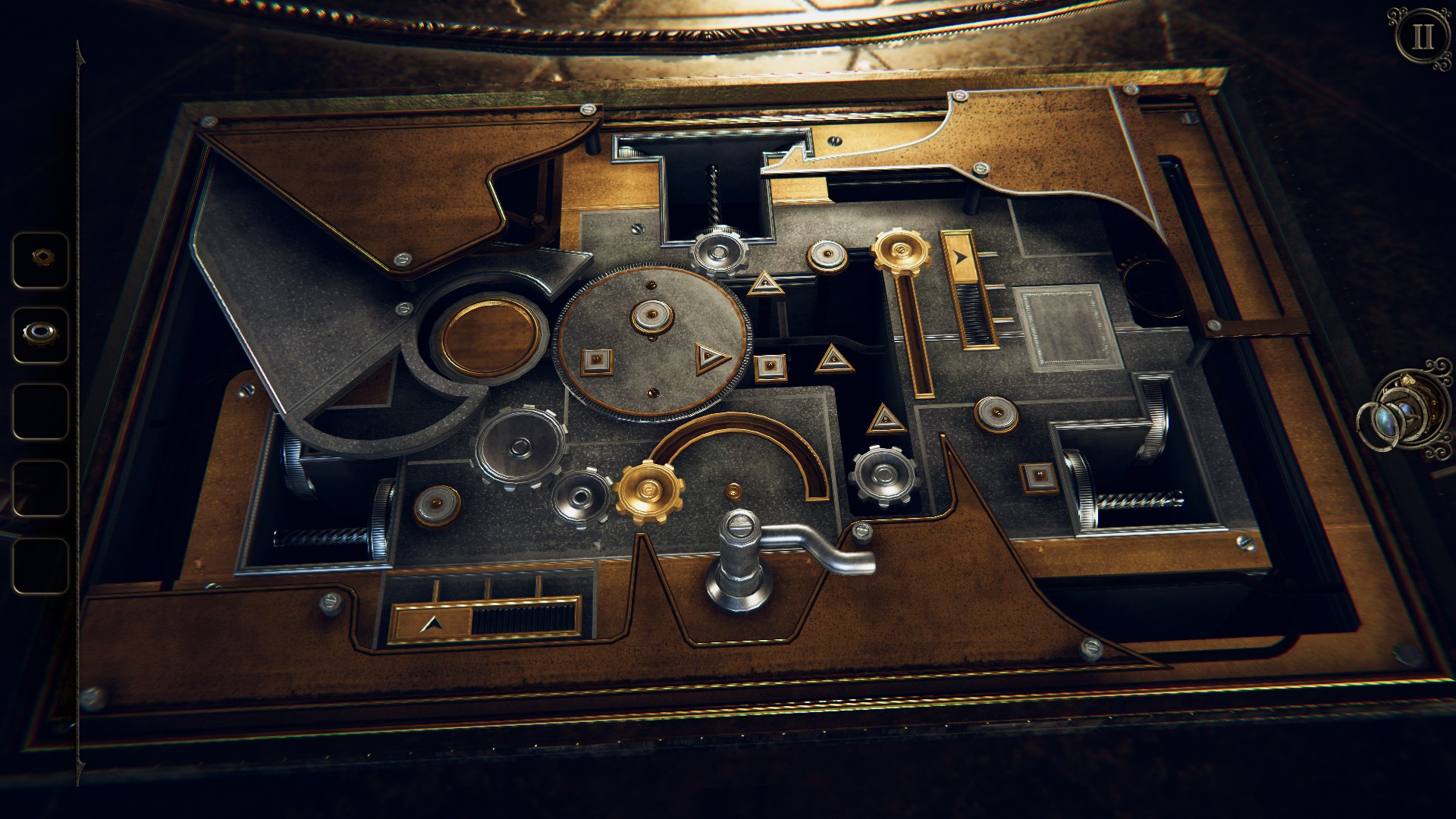
As for the puzzles, similarly to previous games, I wouldn't really call them puzzles. The game is more of a 'find an object, insert it into another object, move this and that, get a new object'. This time the order of puzzles is actually logical even though you still don't need to use your brain to solve them. As in the previous games you'll be clicking around, finding things that can be moved or pressed. If you played the previous games you won't need to click around that much since you might already look at a drawer from all angles in anticipation of a switch or a button at an unlikely place. When you get a new object you'll try to think where it could fit. I'd say the complexity went down in this game but I don't think it was a bad decision. The puzzles and menial tasks you have to do are not confusing which makes the experience good. Thanks to the eyepiece that shows hidden things you can also enter small places - see Alice in Wonderland - and thus operate some things from the inside. I liked this very much even though it wasn't as cool as in VR.
There are still hints in the game. If you get stuck you can click on a lit up question mark and get a hint. There might be more hints for one puzzle and there is a timer when the next one becomes available. There are no hints for puzzles needed to be solved for the alternate endings.
The graphics is beautiful. The textures are beautiful and seem to be of high resolution. Lighting is great. The only thing that's weird are the Null tentacles which seem to be rather low poly compared to other models and moving at half framerate. I haven't played the game on mobile but the PC version truly feels like a game meant for a computer unlike the previous games that tried to run in a mobile phone resolution and whatnot.
I can't comment on sound or music because I turned it off (due to certain sound effects irritating me in the previous games so much).
As for the controls it felt similarly awkward as in the previous games. If you can avoid playing this game with a mouse I recommend doing that - either a touch screen or tablet. On the other hand due to less creative and complex puzzles you don't need to be moving objects in a really strange way so you should not struggle as much as in the previous game.
Verdict:
The Room Three feels more like a PC adventure game rather than a mobile puzzle game. It is a point and click game and that's about it. The previous games focused solely on the puzzles, the first one on single objects, second one on various objects within a room. The Room Three takes it a step further which may not work that well for a mobile device but works on PC. On the other hand this game is very limited in terms of exploration and this way feels rather lacking. While many animations felt more smooth and faster than in previous games, the one most important animation - movement from one place to another - takes a very long time. The graphics are way better and make the game a very enjoyable atmospheric experience (with several horror elements). The controls are still as clunky as ever but the puzzles themselves require less object manipulation which results in less frustration. On the other hand the game is rather buggy and often there are certain layers of graphics that do not align and that make operating the game or solving puzzles more frustrating.
I finished the game in 6 hours including the alternate endings which makes it longer than its predecessors and provides more on the story as well.
I wouldn't recommend this game to anyone, but if mindlessly clicking is your thing you can give this game a try.